


How To Wash Chickens
If you keep chickens, there will almost certainly come a day when you look at one of your feathered friends and wonder how on earth they have got themselves so messy! Whether they have been dust bathing in the wrong place, paddling through something muddy, sitting in a mucky nest box or getting a bit grubby around the bottom, chickens do have a wonderful talent for finding mess.
But before you reach for the shampoo and start filling the tub, it is worth asking the big question: do chickens need washing?
Most of the time, the answer is no. Chickens are surprisingly good at keeping themselves clean. A healthy hen will preen her feathers, dust bathe regularly and use the oils from her preen gland to keep her plumage in good condition. Dust bathing might look like the opposite of washing to us, but for chickens it is one of the best ways to clean their feathers, remove excess oil and help keep external parasites at bay.
That said, there are times when a wash is helpful, and sometimes necessary. The trick is knowing when to leave your chicken to her natural routine, and when to step in with a little warm water and a calm pair of hands.
Do Chickens Need Washing?
Chickens do not need routine baths in the same way that some pets might. In fact, regular washing can strip natural oils from the feathers and may cause unnecessary stress. A chicken’s feathers are designed to protect her from the weather, help regulate temperature and keep her comfortable, so too much washing can do more harm than good.
However, a gentle wash can be useful if your chicken has:
- A very dirty bottom that could attract flies or cause soreness
- Muck stuck to her feathers that she cannot remove herself
- A sticky substance on her plumage
- Mess from a broken egg in the nest box
- Dirty feet or legs before treatment
- A build-up of droppings around the vent
- A special show or photo moment coming up
If your chicken is dirty because she is unwell, has diarrhoea, is hunched, off her food, losing weight or looking generally out of sorts, washing is not the full answer. In that case, it is important to look at the cause, not just the mess. A dirty bottom can sometimes be linked to diet, worms, stress, infection or another health issue, so keep a close eye on the rest of her behaviour.
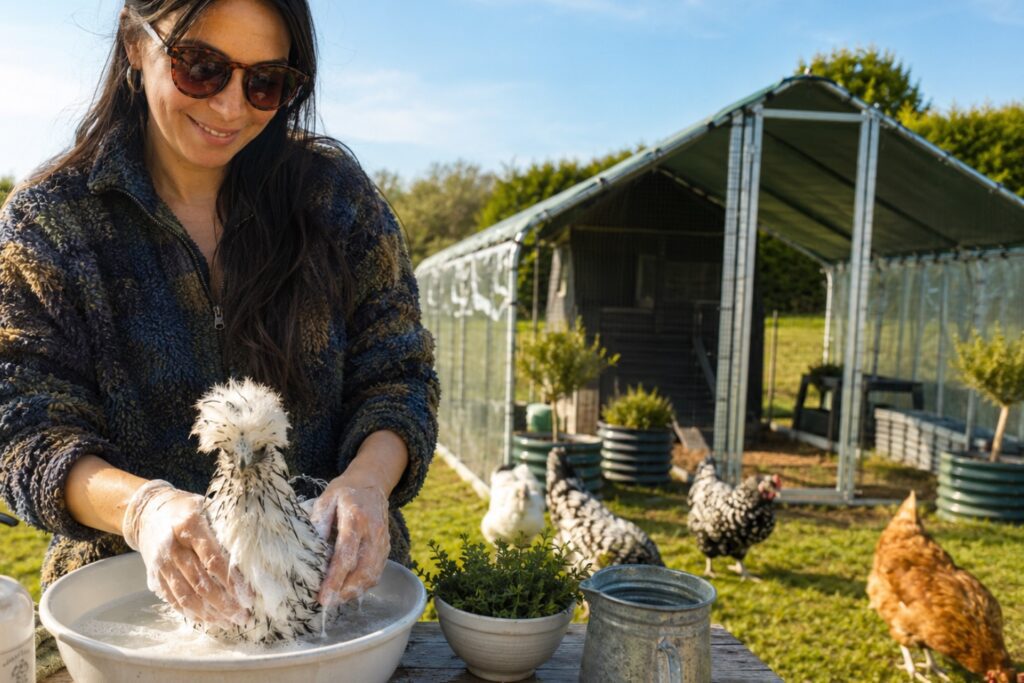
When Not To Wash A Chicken
There are times when washing a chicken is best avoided. Do not wash chickens in cold weather unless it is absolutely necessary and you can dry them fully indoors. Wet feathers can make chickens cold very quickly, especially bantams, older birds or hens that are already under the weather.
You should also avoid washing a chicken just because she has had a good dust bath and looks a little dusty. Dust bathing is normal chicken behaviour and should be encouraged. If your girls have a lovely dry dust bath area, they will usually do a brilliant job of keeping themselves clean.
Avoid washing young chicks unless there is a genuine welfare need. Chicks can become chilled very quickly and should never be soaked unnecessarily. A small localised clean with a warm damp cloth is usually safer if only a tiny area needs attention.
What You Need To Wash A Chicken
Before you begin, get everything ready. Once you have a wet chicken in your hands, you do not want to be dashing around looking for a towel.
You will need:
- A washing-up bowl, sink or shallow tub
- Warm water, not hot
- A gentle pet-safe or poultry-safe shampoo, if needed
- Clean towels
- A soft cloth or sponge
- A jug for rinsing
- A hairdryer on a low, warm setting, if your chicken is calm enough
- A warm indoor space for drying
A second person can also be very handy, especially if this is your first time washing a chicken. One person can hold and reassure your pet while the other does the cleaning.
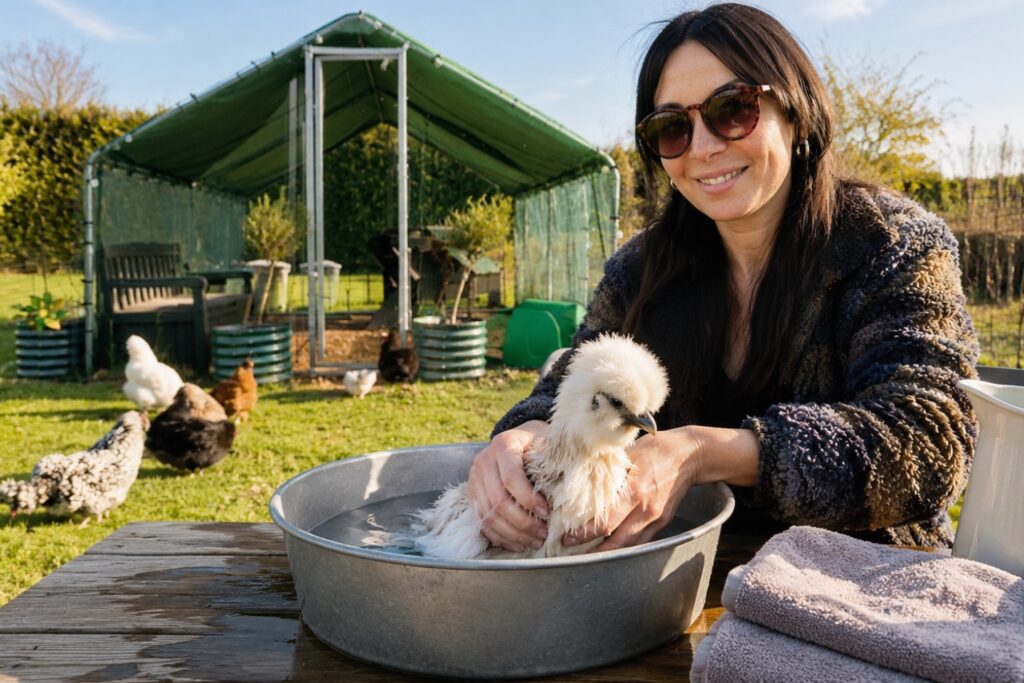
How To Wash Chickens Safely
Start by choosing a warm, quiet place. Chickens can be easily startled, so avoid loud noises, sudden movements or a slippery surface. Speak gently, move slowly and keep the whole process as calm as possible.
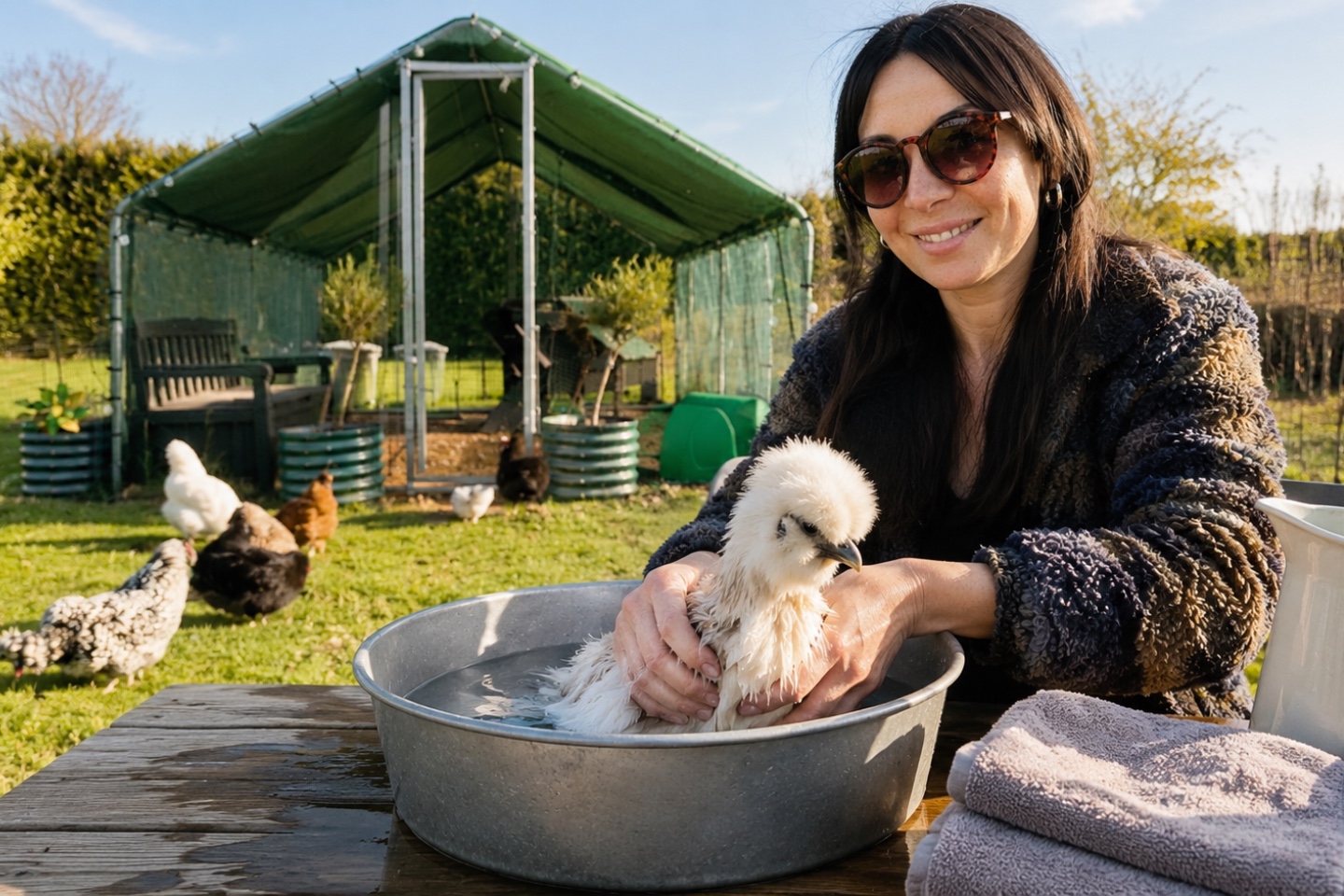
Fill your bowl or sink with a few inches of warm water. It should feel pleasantly warm to your hand, not hot. Gently lower your chicken into the water, supporting her body and keeping her wings close to her sides. Most chickens will settle if they feel secure.
You do not usually need to wash the whole chicken. In many cases, a “bum bath” is enough. This means only cleaning the dirty area around the vent and back feathers, rather than soaking the entire bird.
Use your hand, a soft cloth or sponge to loosen any dried-on mess. If droppings are stuck, give them time to soften rather than pulling at the feathers. Pulling can damage feathers and make the skin sore. A small amount of gentle shampoo can be used if needed, but plain warm water is often enough.
Be very careful around the vent area. Clean gently and avoid scrubbing. If the skin looks red, swollen, broken or very sore, it is worth seeking advice, especially if your hen seems uncomfortable or unwell.
Once the dirty area is clean, rinse thoroughly with warm water. Any leftover shampoo can irritate the skin, so make sure the water runs clear and the feathers feel clean.
Drying Your Chicken After A Wash
Drying is one of the most important parts of washing chickens. A damp chicken can become chilled quickly, even on a mild day.
Wrap your chicken in a clean towel and gently blot the feathers. Do not rub too roughly, as wet feathers are more delicate. Once the worst of the water has been absorbed, you can use a hairdryer on a low, warm setting if your chicken is calm and comfortable with the noise. Keep it moving and do not hold it too close to the skin.
Some chickens are very relaxed about being blow-dried. Others think the hairdryer is a terrifying farmyard monster and would rather not, thank you very much. If your chicken is frightened, stick to towel drying and keep her somewhere warm until she is fully dry.
Do not put a damp chicken back outside, especially in winter or on a windy day. Wait until she is completely dry before returning her to the flock.
How To Wash Chicken's Feet
Sometimes it is just the feet that need attention. Mud, droppings or bedding can get stuck around the toes, and feather-footed breeds can be especially good at collecting garden treasures.
To wash chicken feet, stand your hen in a shallow bowl of warm water and let the dirt soften. Gently clean around the toes with your fingers or a soft cloth. Avoid picking too firmly at any hard build-up, as you could damage the skin.
If you are checking for scaly leg mite, soreness, cuts or swelling, washing the legs first can help you see what is going on more clearly. Clean legs are also easier to treat with suitable products if treatment is needed.
Keeping Chickens Clean Naturally
The best way to keep chickens clean is not by washing them often, but by giving them the right environment. A dry, well-maintained coop and run will do far more for your flock than regular baths.
Make sure your chickens have:
- Clean, dry bedding in the coop
- Fresh nesting material
- Good ventilation without draughts
- A dry dust bath area
- Regular coop cleaning
- Access to clean water
- Suitable mite prevention and hygiene products
A muddy run is sometimes unavoidable in the UK, especially when the weather has been doing its finest impression of soup. Woodchip, covered run areas and good drainage can all help reduce mud and keep your chickens more comfortable.
Dust Baths Are A Chicken’s Favourite Spa Day
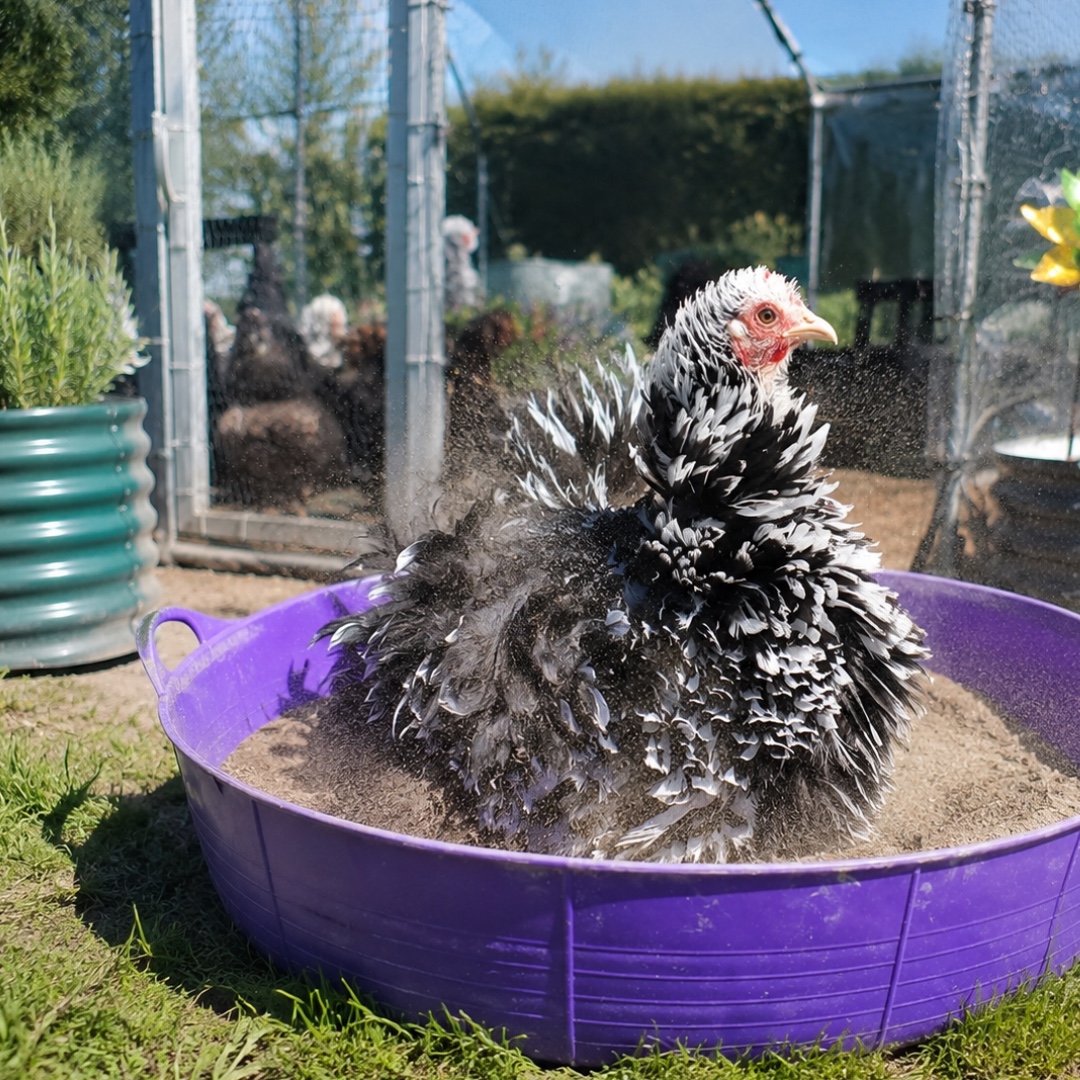
If you want cleaner chickens, one of the best things you can do is give them a proper dust bath. Chickens love to wriggle, roll, flap and shuffle in dry soil, sand or dust bath material. It helps them maintain their feathers and gives them something natural and enriching to do.
A good dust bath can be as simple as a dry patch under cover, a shallow tray or a corner of the run filled with suitable dry material. Keep it sheltered from rain where possible, because a soggy dust bath is just a mud puddle with big dreams.
Do Show Chickens Need Washing?
If you are preparing chickens for a show, you may need to wash them more carefully, especially white or pale-feathered birds. Show birds are often washed a few days before the event, giving their feathers time to settle back into place naturally.
For everyday back garden chickens, though, show-level grooming is not needed. A clean coop, a good dust bath and the occasional targeted wash when necessary will usually be more than enough.
A Quick Word On Flystrike
One of the most important reasons to keep a chicken’s bottom clean is to reduce the risk of flystrike. This is when flies lay eggs on dirty or damp feathers, usually around the vent area. The eggs hatch into maggots, which can cause serious harm very quickly.
Flystrike is more likely in warm weather, especially if a chicken has a dirty bottom, loose droppings or an underlying health problem. If you notice maggots, a strong smell, wounds, lethargy or a hen that seems very poorly, treat it as urgent and seek veterinary advice straight away.
Keeping the vent area clean, checking your flock regularly and dealing with messy feathers promptly can make a big difference.
So, How Often Should You Wash Chickens?
As little as possible. Chickens are not meant to be bathed every week, and most will go their whole lives without needing a full wash. Think of washing as a useful tool for occasional problems, not part of a normal grooming routine.
A quick bottom clean, foot wash or localised rinse is usually better than a full bath. Keep it gentle, keep it warm and only do what is needed.
Happy, Healthy Hens With Pipinchick
At Pipinchick, we know that chicken keeping is full of funny little moments, from glamorous dust baths to muddy feet and the occasional hen who looks like she has rolled through half the garden. Most of the time, your chickens will keep themselves beautifully clean with a good dust bath, fresh bedding and a well-kept coop.
When they do need a helping hand, a gentle wash can make them more comfortable and help prevent bigger problems. The key is to wash only when necessary, dry them properly and always keep an eye on why they became dirty in the first place.
From bedding and disinfectants to mite treatments, supplements, tonics, enrichment and chicken house accessories, Pipinchick has plenty of practical products to help you keep your flock clean, healthy and happy, without turning bath time into a full farmyard drama.
We sell chickens online, which are reared from birth on our farm in the beautiful Somerset countryside, near Bristol. We deliver happy, healthy hens, direct to your door.