


What Mites, Lice and Parasites Are Common in Chickens?
Discover Mites, Lice and Parasites That You Might Find on Your Chickens
There are many different parasites that can cause noticeable symptoms in chickens. Some of the most common include:
- Red mites
- Poultry lice
- Worms, including gapeworm
- Scaly leg mites
They are all parasites and can cause an infestation either internally or externally in your hen.
Chicken mites and lice are external parasites that live either on the bird or within the chicken coop and surrounding environment. Some mites, including red mites, feed on your hen’s blood. A serious infestation can lead to anaemia, weakness and a noticeable loss of condition.
Poultry lice generally feed on skin debris, feathers and secretions rather than blood, but they can still cause significant irritation, feather damage and discomfort.
Internal parasites, such as roundworms, hairworms and gapeworm, live inside your hen’s body and use her as a host. They are all unpleasant for your chicken, but most infestations are manageable when identified and treated promptly.
Red mites and poultry lice do not normally live permanently on humans. However, some bird mites can temporarily bite people and cause skin irritation, particularly when there is a heavy infestation.
What Are the Main Symptoms of Mites, Lice and Parasites in Chickens?
The symptoms can vary depending on the type and severity of the infestation. Common signs of mites, lice or worms in chickens may include:
- Pale combs and wattles, potentially caused by anaemia
- Irritability and increased scratching
- Frequent preening or feather pecking
- Feather loss or damaged feathers
- Loss of weight and overall condition
- Reduced egg production
- Loose or runny droppings, sometimes with worms visible in the stool
- Gasping or difficulty breathing
- Loss of appetite and lethargy
- Reluctance to go inside or sleep in the chicken coop
- Raised scales and white or crusty areas on the legs and feet
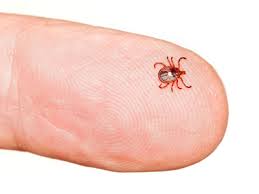
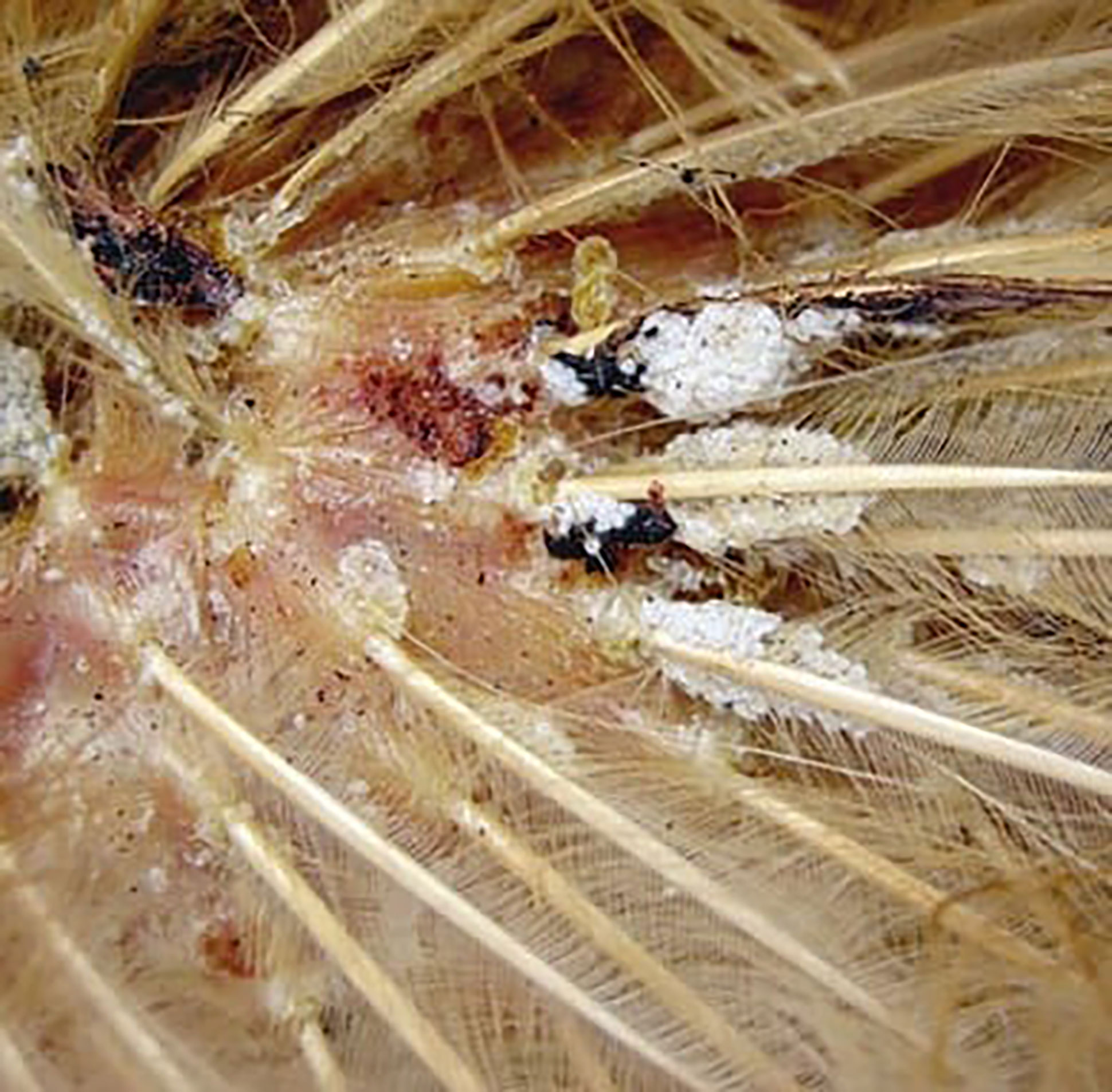
- Small mites or clusters of lice visible around the vent, under the wings or beneath the feathers
Gapeworm is a parasite that lives in the respiratory system. It can cause chickens to stretch their necks, shake their heads, gasp or appear to struggle for breath.
However, breathing difficulties can also be caused by respiratory infections and other serious conditions. A chicken that is gasping, extremely weak or struggling to breathe should be assessed by a poultry-friendly vet rather than treated on symptoms alone.
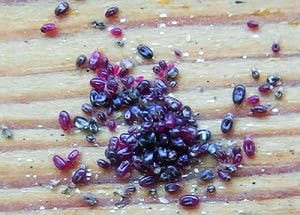
Red mites live mainly inside the chicken coop and come out at night to feed. One common sign is that hens become reluctant to enter the coop at bedtime or appear unsettled while roosting.
How Are Mites, Lice and Parasites Contracted?
Chicken mites, lice and internal parasites can be contracted in several different ways.
Internal parasites are often picked up when hens consume worm eggs or larvae from contaminated ground, droppings or bedding. These may have come from an infected flock mate or from wild birds.
As hens naturally scratch and forage, they can accidentally ingest contaminated soil or faecal matter. Internal parasites are therefore more likely to become a problem where droppings and damp bedding are allowed to accumulate.
Mites and lice can be introduced by:
- Wild birds
- New or infected chickens
- Rodents and other wildlife
- Contaminated equipment, bedding or transport crates
- An already infested chicken coop or hen house
Red mites hide in cracks, joints, perch ends and small crevices inside the chicken house. They can be found in wooden coops, but plastic houses are not completely immune because mites can still shelter around joins, fixings and removable parts.
Red mite problems are generally more noticeable during warmer weather because heat allows their lifecycle to progress more quickly. They may survive for long periods within an empty coop, which is why treating the housing is just as important as checking the hens.
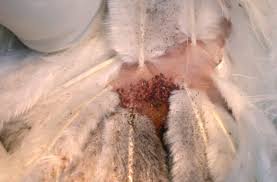
Poultry lice spend most of their lifecycle on the chicken. They are commonly found around the vent, beneath the wings and on the lower body. Their eggs, sometimes called nits, may be seen attached to the base of the feathers.
How to Prevent Mites, Lice and Parasites in Chickens
Keeping a clean environment is one of the main ways to reduce the risk of parasites in chickens.
Regularly clean and disinfect your coop and run using a suitable poultry-safe disinfectant, such as Virkon S, following the product instructions carefully.
Remove droppings regularly and replace dirty or damp bedding before it begins to build up. Depending on the type of litter and the number of birds you keep, bedding may need to be refreshed every two to three weeks or more frequently.
- Pay particular attention to:
- Perches and perch ends
- Nest boxes
- Joints and corners
- Removable trays
- Screw holes and fixings
- Cracks and crevices
- The underside of roofing and felt
If you have a gravel or bark-lined run, remove visible droppings regularly. Bark may need to be replaced periodically, particularly if it becomes wet, dirty or difficult to clean. Gravel can be cleaned using a poultry-safe product where appropriate, following the manufacturer’s dilution and safety instructions.
Have a read of our guide to keeping your chicken coop clean for further advice on maintaining a healthy environment for your flock.
Provide a Dust Bath for Your Chickens
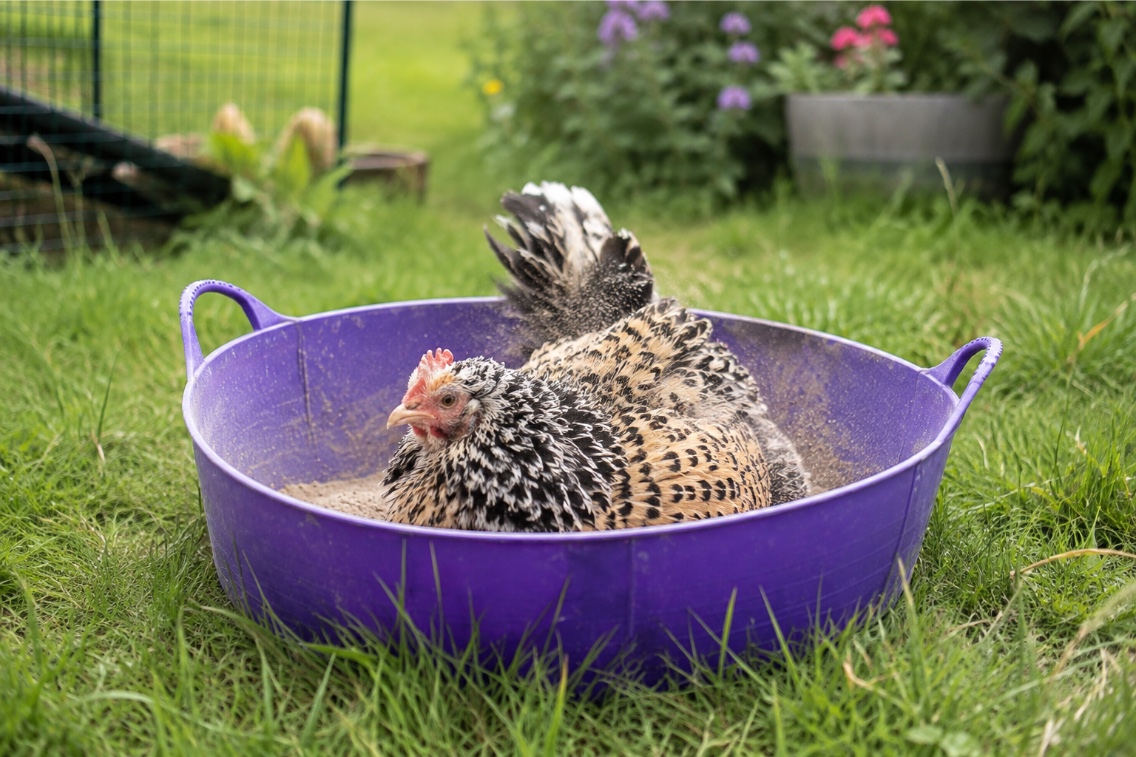
Chickens will naturally try to keep mites and lice at bay by bathing in dry soil or dust. Dust bathing also helps them maintain their feathers and provides an important form of natural enrichment.
A chicken dust bath is very easy to create and can form part of your general parasite-prevention routine.
You can use a ready-made dust bath or make your own using:
- A large tyre
- An old sink or bath
- A wide plastic tub
- A shallow planter
- A children’s sandpit
- A sturdy under-bed storage container
Your dust bath should be positioned in a covered area and kept dry. Chickens may be more inclined to use a tub if it is stable, easy to step into and partly sunk into the ground.
Fill it with a loose mixture such as dry soil and fine play sand. Some keepers also use a small amount of a suitable diatomaceous earth product, although very fine powders can become airborne and irritate the respiratory system.
Always follow the manufacturer’s instructions when using diatomaceous earth or any other powdered product around chickens. Avoid creating clouds of dust and ensure the dust bath is placed in a well-ventilated area.
Our guide on how to make a dust bath for chickens explains which containers and materials you can use.
A dust bath can help chickens perform their natural cleaning behaviour, but it should not be relied upon as the only treatment for an established mite or lice infestation.
How to Prevent Scaly Leg Mites
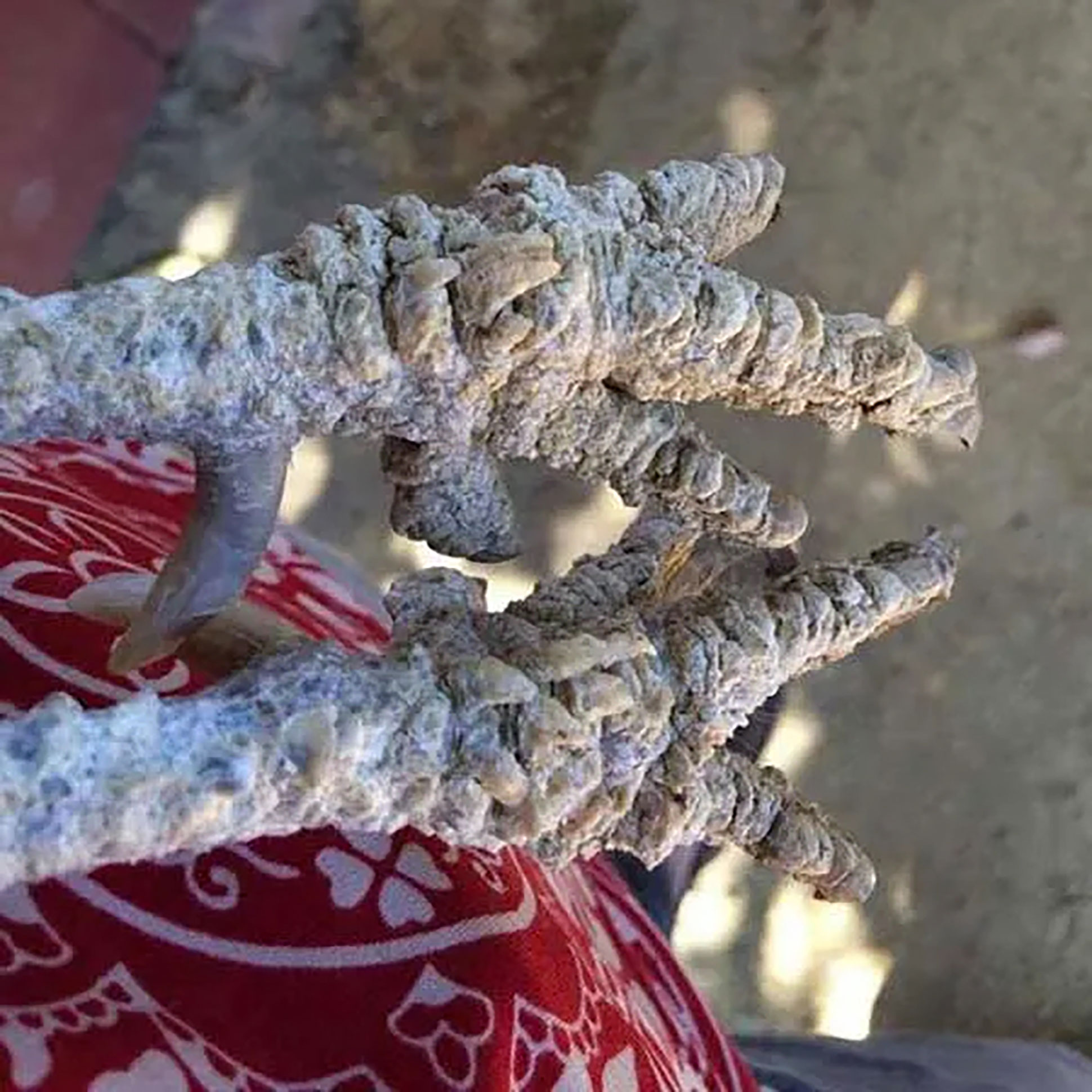
Scaly leg mite is an external parasite that burrows beneath the scales on a chicken’s legs and feet.
It can spread through close contact with affected birds or through a contaminated environment. Early signs include scales that begin to lift away from the leg, often with pale, white or crusty material around their edges.
Regularly checking your hens’ legs and feet will help you spot the signs before the condition becomes more advanced.
Keeping the coop clean and treating affected birds promptly can also help prevent the mites from spreading through the flock.
How to Check for Red Mites in a Chicken Coop
Red mites can be more difficult to detect because they are nocturnal and usually hide within the coop during the day.
Regularly inspect the coop, paying close attention to cracks, perch ends and joins. You may see clusters of small grey, brown or red mites, or dark specks around their hiding places.
You can also check the coop at night using a head torch. Look along the perches and examine the birds while they are settled.
Wiping a piece of white kitchen roll around cracks and underneath perches can sometimes reveal red or brown smears from crushed mites.
Regular monitoring is important because a red mite infestation can increase quickly during warm weather. Government welfare guidance recommends checking both equipment and birds for mites and having an appropriate monitoring and treatment plan in place.
Preventing Internal Parasites in Chickens
Keeping the coop and run clean can help reduce the number of worm eggs and larvae in the environment.
Moving feeders and drinkers regularly, keeping bedding dry and preventing chickens from eating from heavily contaminated ground can also help.
Some chicken keepers use garlic, herbal products or ready-made natural remedies between treatments. However, these products should not be assumed to reliably prevent or eliminate a worm infestation.
Medicated worming treatments should only be used according to their packaging, current veterinary guidance and the needs of your flock.
A faecal worm egg count can also help establish whether treatment is required. This may be particularly useful if you are unsure whether your chickens have worms or want to avoid treating unnecessarily.
Effective Treatment for Mites, Lice and Parasites
The right treatment depends on the type of parasite involved. It is important to distinguish between mites, lice, worms, respiratory disease and other possible causes of illness wherever possible.
Treatments should be authorised for use in chickens and used according to the manufacturer’s instructions. This is particularly important for laying hens because some products have restrictions relating to eggs or meat.
Speak to a poultry-friendly vet if:
- Your chicken is very weak or pale
- She is struggling to breathe
- She has stopped eating or drinking
- The infestation is severe
- Several birds are affected
- Symptoms continue after treatment
- You are uncertain which parasite is causing the problem
Treating Internal Parasites, Including Gapeworm
Most common internal worms live in a chicken’s digestive system. Gapeworm, however, lives within the respiratory system and may cause symptoms such as stretching the neck, opening the beak, head shaking, coughing or gasping.
These symptoms can look similar to those caused by respiratory infections, including Mycoplasma, so it is important not to assume that every gasping chicken has gapeworm.
Flubenvet is a medicated poultry wormer containing flubendazole. It should be used strictly according to the current product instructions or veterinary advice.
Where a powdered wormer is mixed into feed, prepare the correct amount for the full treatment period and ensure it is mixed thoroughly. The birds should receive the treated feed as directed on the packaging.
Avoid guessing the dosage or changing the treatment period. Always check the current instructions because authorised uses, dosing guidance and withdrawal information can change.
Regular worming schedules were once widely recommended, but many keepers now use a combination of good hygiene, monitoring and faecal testing to decide when treatment is appropriate. Your vet can advise you on a suitable approach for your flock and local conditions.
How to Treat Mites and Lice on Chickens
If you find mites or lice on your chickens, begin by identifying whether the problem is living mainly on the birds or within the chicken coop.
Poultry lice usually remain on the bird, while red mites spend much of their time hidden within the housing.
Clean the coop thoroughly by:
- Removing all bedding
- Taking out removable perches and trays
- Scrubbing joints and crevices
- Cleaning beneath perch ends
- Allowing the house to dry
- Applying an appropriate poultry-safe treatment according to its instructions
Replacing the bedding with clean, dry material
The birds may also need treatment with a product authorised or recommended for use against the parasite concerned.
Avoid using ordinary dog or cat flea shampoos or treatments unless a vet has specifically advised that the particular product is safe and appropriate for chickens. Products formulated for other species may contain ingredients or doses that are unsuitable for poultry.
When using powders, sprays or washes, follow the instructions carefully and avoid the eyes, nostrils and mouth. Make sure birds are kept warm and dry after any approved washing treatment.
With poultry lice, repeat treatment may be required because some products do not kill the eggs attached to the feather shafts.
For a serious red mite infestation, your vet may prescribe Exzolt. This is a prescription-only treatment added to drinking water and is specifically authorised in Great Britain for treating poultry red mite infestations in chickens.
Treating the birds alone will not resolve a red mite infestation. You will also need to clean, monitor and treat the chicken house as advised because most of the mites will be hiding within the environment.
How to Treat Scaly Leg Mites
Scaly leg mites burrow beneath the scales on a chicken’s legs and feet. As the infestation develops, the scales may become raised, rough, crusty or distorted.
Do not try to pull off or scrub away the raised scales, as this can cause pain, bleeding and permanent damage.
Treatment generally involves coating the legs and feet with a suitable barrier or scaly leg treatment. This can help smother the mites while protecting the affected skin.
Apply the product according to its instructions, making sure it reaches beneath and around the raised areas without forcing the scales upwards.
The chicken coop should also be cleaned and any affected flock mates checked. Improvement may take time because damaged leg scales will not immediately return to normal, even after the mites have been treated.
Ask a vet for advice if the legs are swollen, bleeding, infected or badly distorted.
Keeping Your Chickens Happy and Healthy
Parasites are a common problem, but regular checks and a clean, dry living environment can make infestations much easier to prevent and manage.
Get into the habit of checking your hens beneath the wings, around the vent and along the legs and feet. Inspect the chicken coop regularly too, particularly around perches and hidden crevices where red mites may gather.
At Pipinchick, we stock a range of chicken healthcare products, coop-cleaning supplies and dust bath essentials to help you care for your flock. Browse our chicken supplies online, or contact the Pipinchick team for friendly advice about choosing suitable products for your hens.