


What Should I Put in a Chicken Run?
Find Out the Best Things To Put in a Your Chicken's Run
A chicken run should provide more than a secure patch of ground around the coop. It is where your hens will spend much of their day scratching, foraging, dust bathing, exploring and keeping themselves entertained.
When deciding what to put in a chicken run, it is important to think about your hens’ natural behaviour as well as the practical side of keeping the area clean, dry and secure.
You do not need to fill the run with expensive toys or complicated equipment. A few carefully chosen features can help turn an empty enclosure into an interesting and comfortable space for your chickens.
The best chicken run setup will usually include suitable flooring, shelter from the weather, places to perch, a dry dust bath and a variety of safe enrichment activities.
Start With a Safe and Secure Chicken Run
Before adding enrichment or decorations, make sure the chicken run itself is safe.
The fencing should be secure, with no gaps that chickens can squeeze through or predators can enter. Foxes and other animals may also try to dig underneath, so the bottom of the run should be protected.
Check regularly for:
- Loose wire or broken panels
- Sharp edges
- Gaps beneath the fencing
- Weak locks or catches
- Weather damage
- Signs of rodents or digging
The run should give your hens enough room to move around comfortably and get away from one another when needed. This is particularly important if you keep a mixed flock with different breeds, sizes and personalities.
A practical chicken run should also allow you to reach all areas easily so you can remove droppings, refill feeders and inspect the fencing.
What Is the Best Flooring for a Chicken Run?
Choosing what to put on the floor of a chicken run will depend on whether the run is covered, how well the area drains and how many chickens use it.
Grass may seem like the obvious option, but chickens are very efficient at scratching it up. In a permanent run, the grass will usually disappear quite quickly, leaving bare ground that can become muddy during wet weather.
Suitable chicken run flooring options include:
- Woodchip
- Hardwood bark
- Gravel
- Sand
- Soil
- Paving slabs
A combination of different surfaces
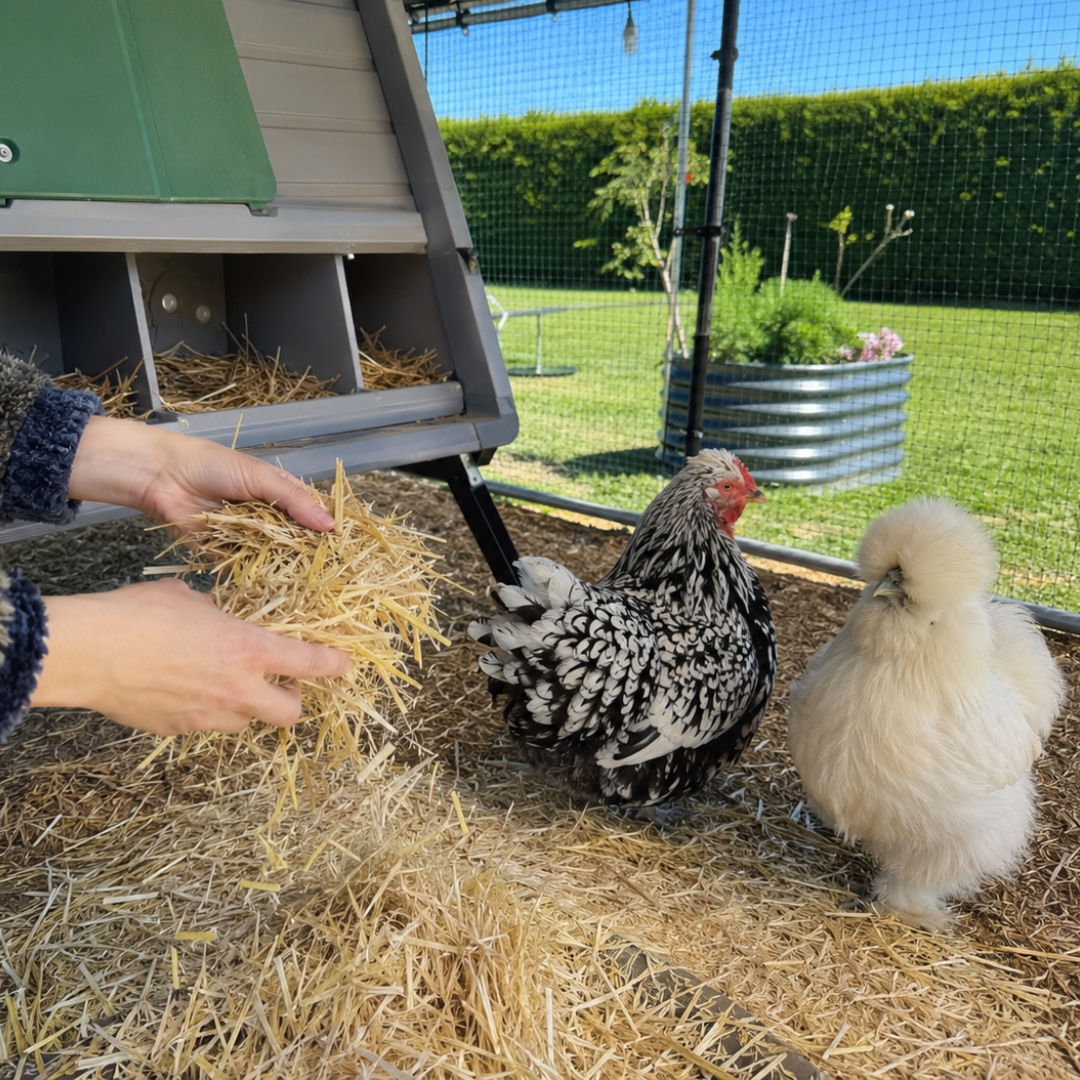
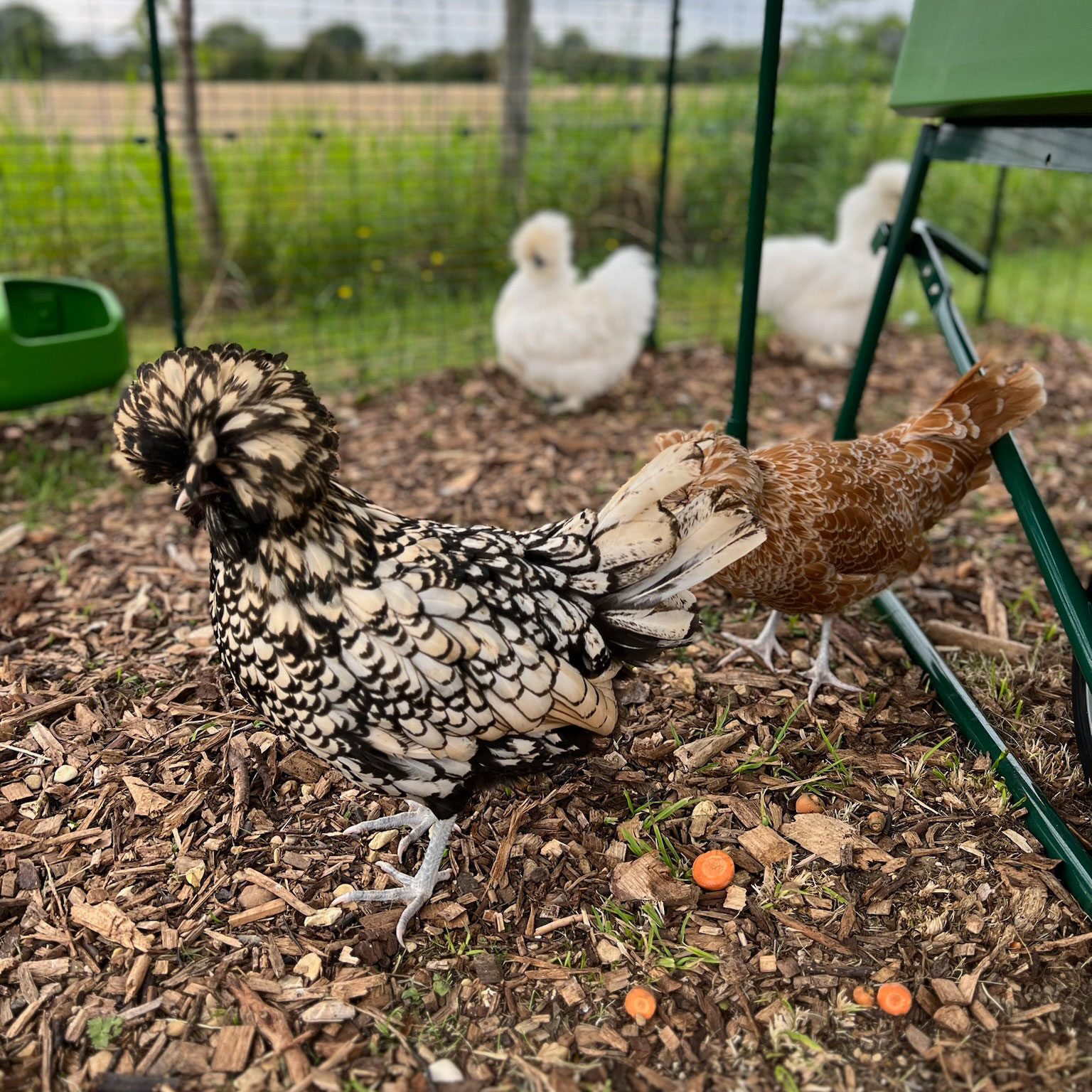
Woodchip is a popular option because it gives hens something to scratch through and can help reduce mud. Choose untreated woodchip and avoid anything made from painted, varnished or chemically treated timber.
Bark can also work well, particularly in larger outdoor runs, but it will gradually break down and mix with droppings and soil. Wet or heavily soiled material should be removed rather than repeatedly covered with fresh layers.
Sand can be useful in a dry, covered run with good drainage. It is easy for chickens to scratch through and droppings can often be removed with a scoop. However, sand may become compacted and waterlogged in an exposed run.
Gravel can help with drainage, while paving slabs are useful beneath feeders, drinkers and around the entrance to the coop. If the entire run is paved, make sure your chickens also have access to loose material for scratching and dust bathing.
In many chicken runs, a mixture works best. You might use slabs around the entrance and feeding areas, with woodchip or soil elsewhere.
Provide Shelter From Rain and Sun
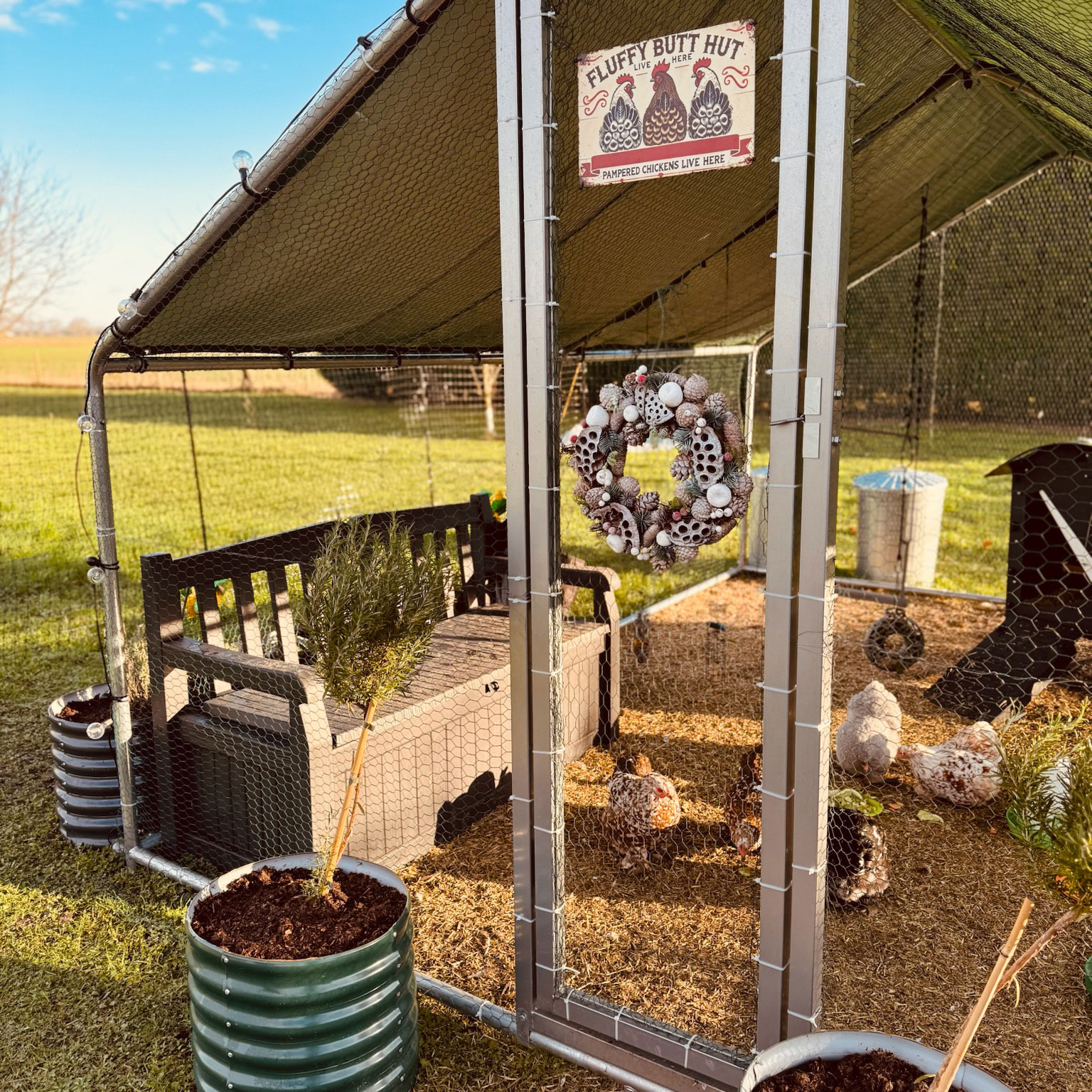
One of the most useful things to put in a chicken run is a covered area.
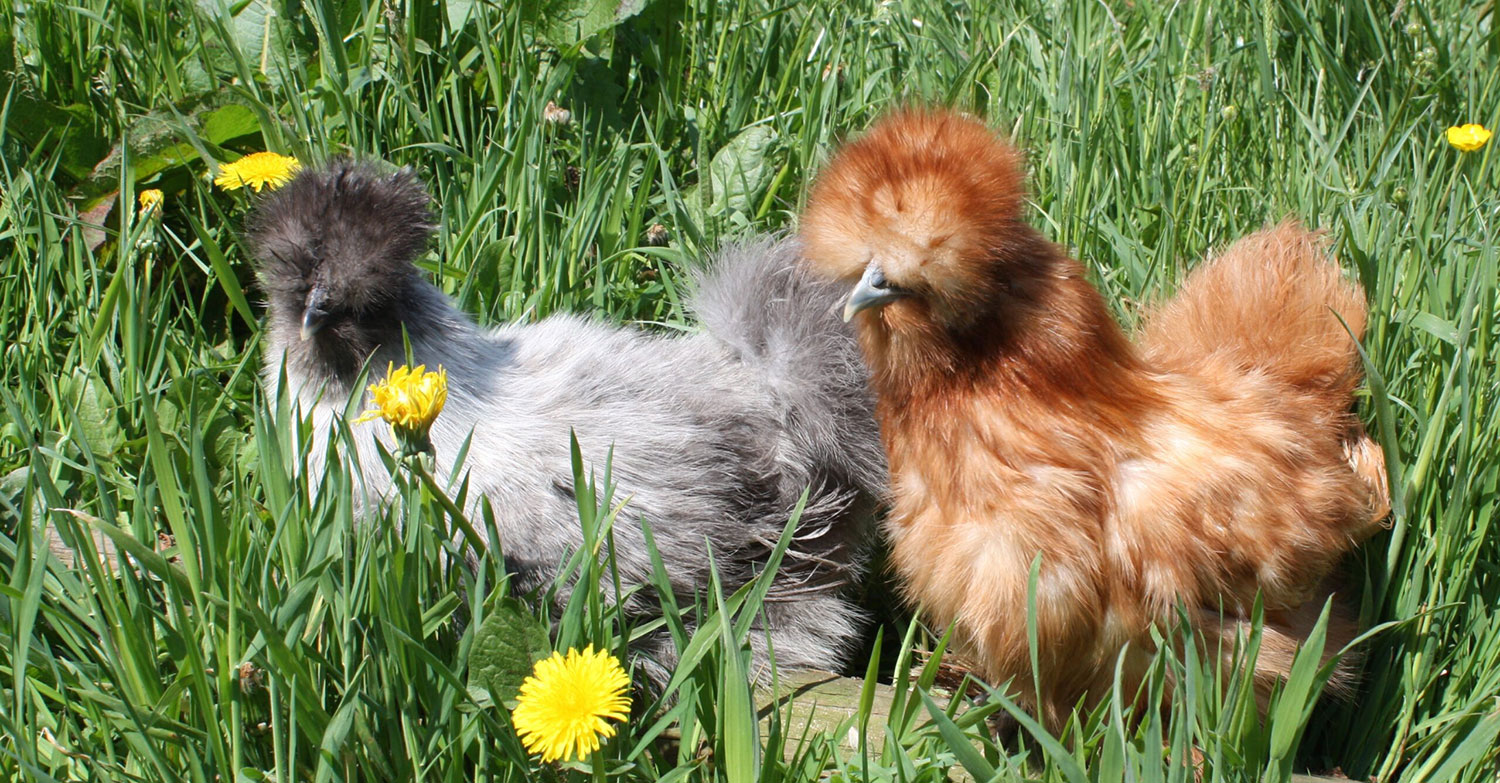
Shelter gives chickens somewhere dry during wet weather and somewhere shaded during hot, sunny days. This is especially helpful for Silkies and other heavily feathered breeds that can become wet and muddy more easily.
You could provide shelter using:
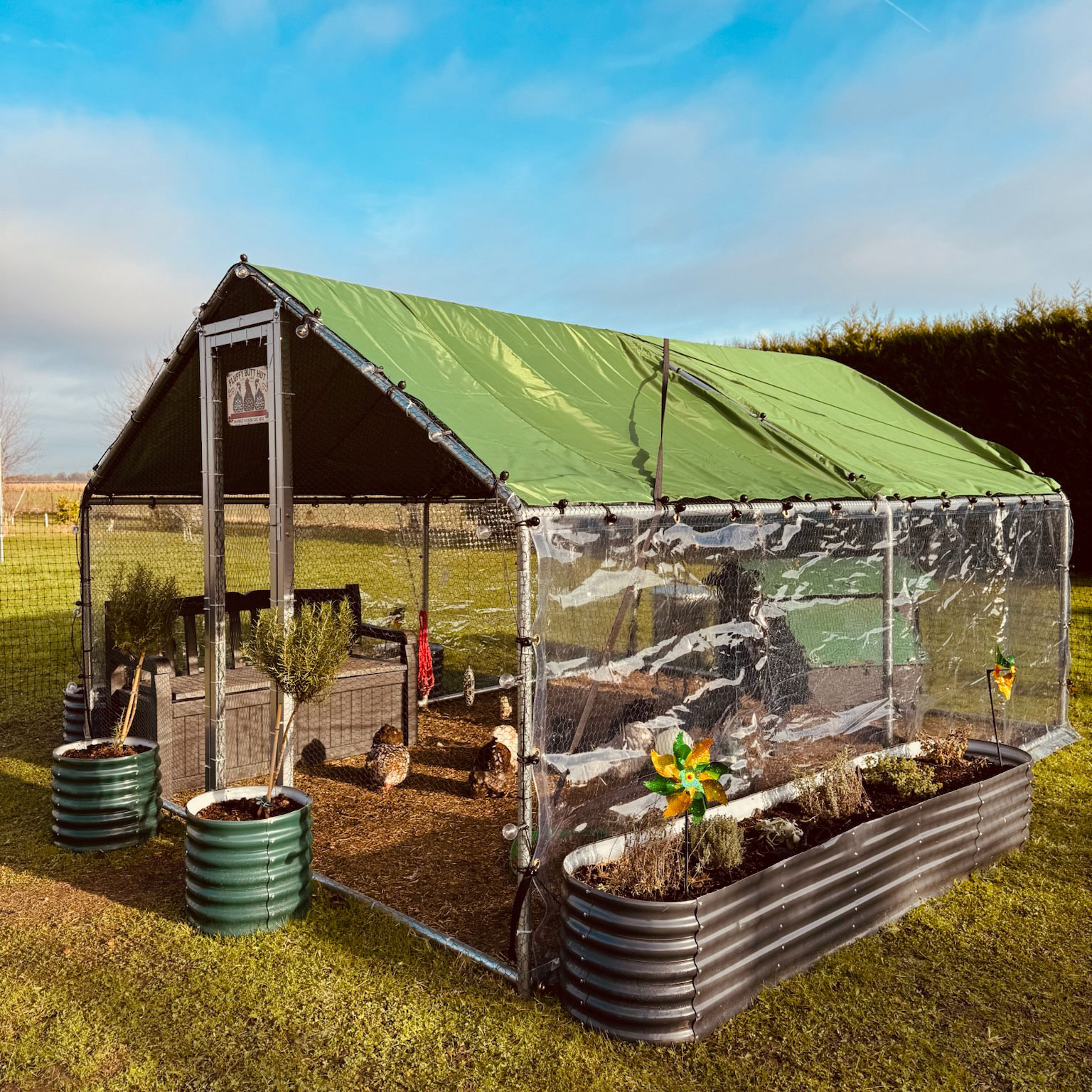
- A solid run roof
- Clear corrugated roofing
- A purpose-built chicken shelter
- A covered section beside the coop
- A securely fixed tarpaulin
- A small weatherproof table or platform
Any shelter should be stable and able to withstand strong winds. Make sure the run remains well ventilated and avoid creating low areas where rainwater can collect.
Covering at least part of the run will also help keep food, bedding and dust baths dry.
Add a Dust Bath
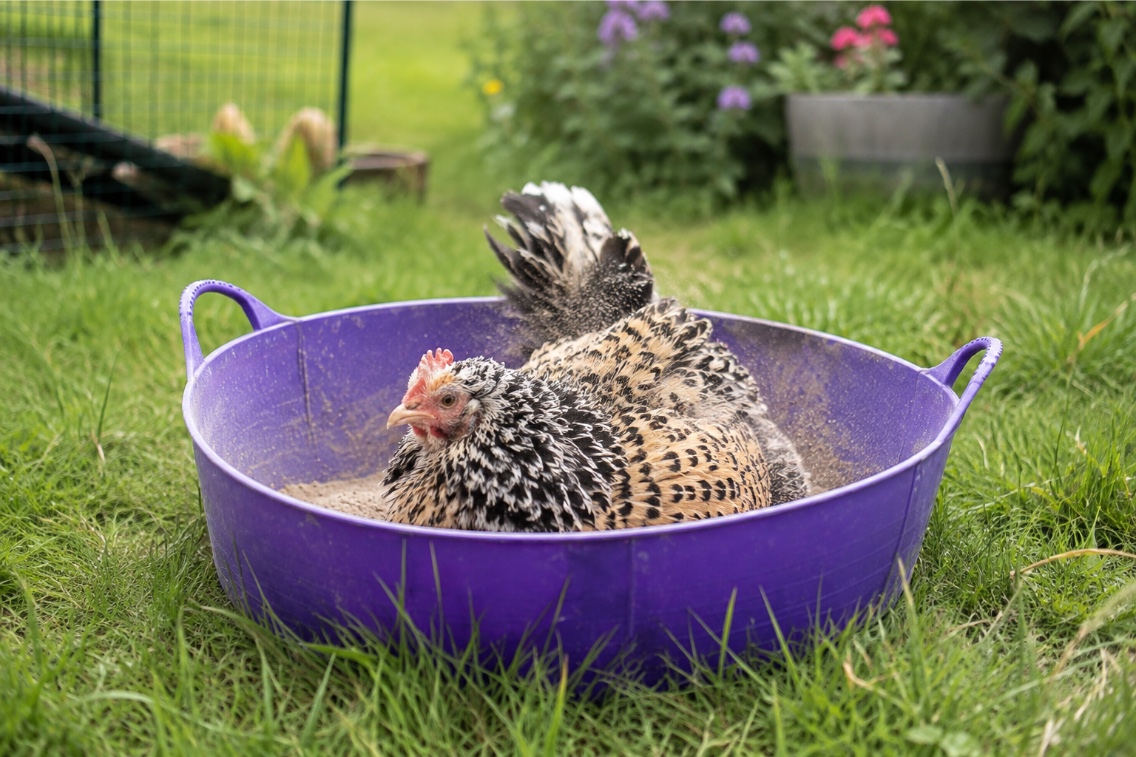
A dust bath is one of the most important chicken run ideas because it allows hens to carry out a completely natural behaviour.
Chickens use loose soil and dust to help absorb excess oil and keep their feathers in good condition. Dust bathing also provides useful enrichment and may help make the feathers less welcoming to external parasites.
Place the dust bath in a covered area so it stays dry.
Suitable containers include:
- A large shallow plastic tub
- A sturdy storage box
- A children’s sandpit
- An old tyre
- A wooden box with low sides
- A large planter
- Fill the container with dry soil, fine play sand or a combination of both. It should be wide enough for a chicken to lie on her side, stretch her wings and roll around comfortably.
Our guide on how to make a dust bath for chickens includes more advice on suitable containers and materials.
Include Perches and Raised Areas
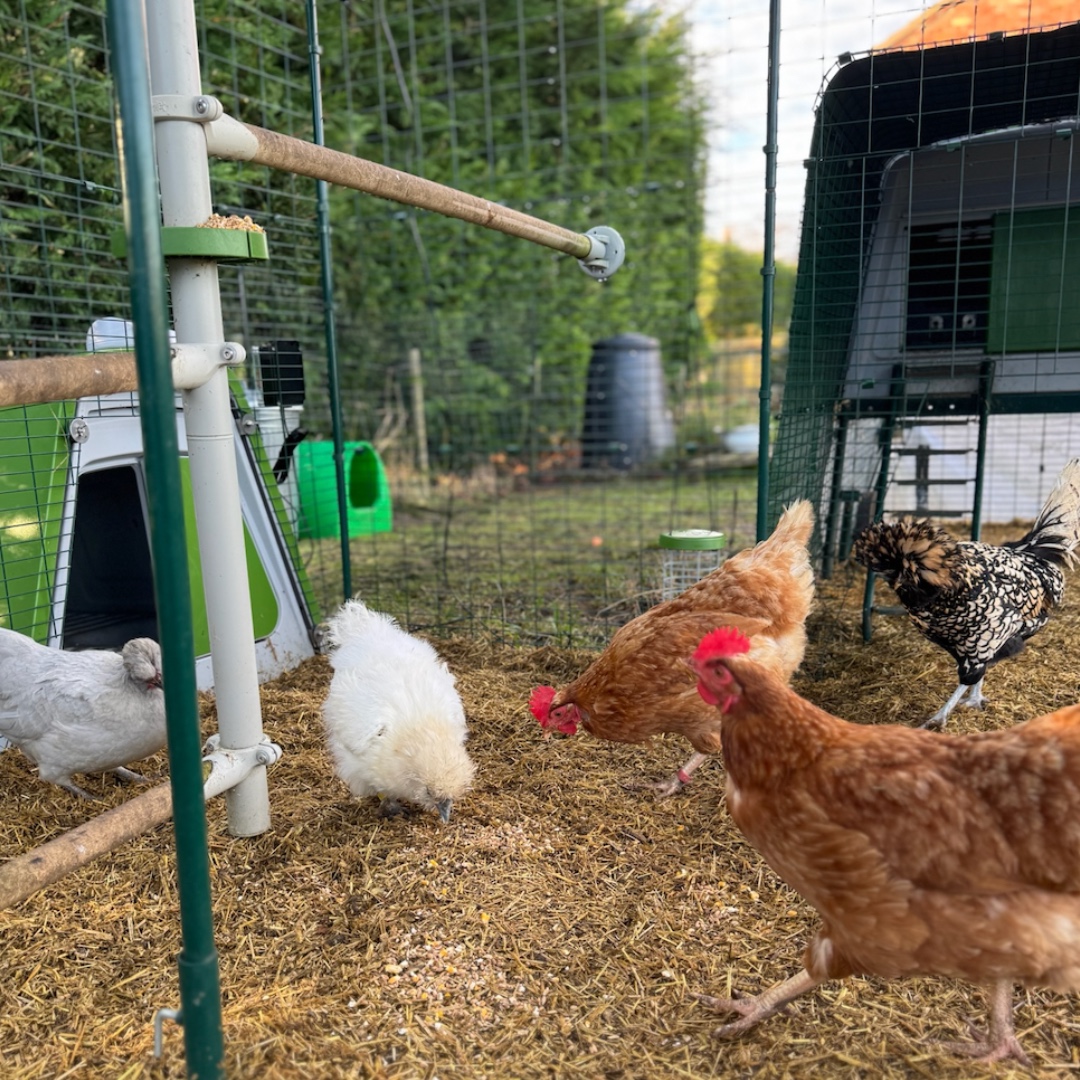
Chickens naturally like to perch above ground level. Adding perches to the run gives them somewhere to rest, observe their surroundings and move away from other members of the flock.
You can use:
- Natural branches
- Smooth wooden poles
- Purpose-built chicken perches
- Low wooden platforms
- Tree stumps
- Strong garden benches
Make sure anything you add is stable and securely fixed. Natural branches should be thick enough for the chickens to grip comfortably and free from sharp points.
Silkies and some heavier breeds may prefer lower perches or broad platforms because they are not always strong flyers. Providing different heights allows each hen to choose what suits her.
Avoid placing high perches directly above feeders, drinkers or areas where other chickens regularly stand.
Create Places to Explore and Hide
A completely open chicken run can feel exposed and may offer very little stimulation.
Adding visual barriers and sheltered corners makes the space more interesting. It can also help lower-ranking hens move out of sight if another chicken is being bossy.
Useful additions include:
Logs
Tree stumps
Low platforms
Large plant pots placed on their sides
Wooden crates
Small shelters with more than one exit
Piles of sturdy branches
Avoid creating narrow hiding places with only one entrance, as a hen could become trapped by a more dominant flock member.
Anything placed in the run should be stable, safe and easy to move when you need to clean underneath it.
Add Chicken Enrichment Activities
Chicken enrichment does not need to be expensive. The aim is simply to encourage natural behaviours such as scratching, pecking, exploring and foraging.
- Simple chicken run enrichment ideas include:
- Hanging a cabbage or leafy vegetable
- Scattering a small amount of suitable food through clean bedding
- Providing a tray filled with soil and dry leaves
- Adding logs that can be turned over occasionally
- Using a safe pecking block
- Providing a chicken treat ball
- Moving perches and objects around from time to time
Food-based activities should be used in moderation. Treats should only make up a small part of your chickens’ diet, with their main food coming from a complete and nutritionally balanced chicken feed.
Avoid using long pieces of string to hang food, as these can become tangled around a chicken’s feet or legs.
Use Natural Materials
Logs, branches and tree stumps are useful additions to a chicken run because they encourage climbing, scratching and exploring.
Chickens may perch on them, stand on them to preen or search around them for insects. Turning a log over occasionally can reveal small bugs and give the flock something new to investigate.
Only use untreated wood. Check natural materials regularly for sharp edges, rot or instability.
You can also add a pile of clean, dry leaves for the hens to scratch through. Avoid anything mouldy or collected from areas that may have been treated with pesticides or weedkiller.
Can You Put Plants in a Chicken Run?
Keeping plants alive inside a chicken run can be challenging. Chickens are likely to scratch around the roots, peck the leaves and stand on anything within reach.
You may have more success growing chicken-safe plants around the outside of the run, where the hens can reach leaves through the wire without destroying the roots.
Plants inside the run can also be protected with sturdy wire cages.
Always check that a plant is safe for chickens before adding it. Avoid anything treated with pesticides, chemical fertilisers or weedkillers.
Position Feeders and Drinkers Carefully
Feeders and drinkers are essential, but where you place them can affect how clean and dry the chicken run remains.
Put them under cover so that rain does not spoil the feed or fill the drinker with dirty water.
Raising feeders and drinkers slightly can help prevent chickens from scratching bedding and soil into them. They should still be low enough for every member of the flock to reach comfortably.
Clean drinking water should always be available. During warm weather, check it several times a day and keep the container in the shade.
If you have a larger flock, provide more than one feeding and drinking point so dominant hens cannot prevent others from eating or drinking.
Keep the Chicken Run Clean
Whatever you decide to put in a chicken run, it should be easy to clean and maintain.
Remove obvious droppings regularly, particularly beneath perches, around feeders and beside the coop entrance.
Replace wet or dirty flooring before it begins to smell. Move logs, shelters and other objects occasionally so you can clean underneath and check for dampness, rodents or mites.
Good drainage is extremely important. Even the best chicken run flooring will become unpleasant if water is allowed to collect.
Our guide on how to keep your chicken coop clean includes more advice on maintaining the coop, run and equipment.
Things You Should Not Put in a Chicken Run
Avoid anything that could cause injury, trap a bird or expose the flock to harmful substances.
This includes:
- Treated or painted timber
- Sharp metal or broken plastic
- Loose netting
- Long pieces of string
- Mouldy food or bedding
- Toxic plants
- Chemical garden products
- Very dusty industrial materials
- Unstable furniture
- Containers that collect deep rainwater
Check second-hand items carefully before using them. Old garden equipment may contain sharp edges, flaking paint or unknown chemical treatments.
Change the Run Occasionally
Chickens are naturally curious, but even an interesting run can become familiar over time.
You do not need to replace everything. Moving a perch, adding a fresh log or changing the position of a scratching tray can give your hens something new to investigate.
During summer, focus on shade and plenty of fresh water. In winter, prioritise dry shelter, drainage and enrichment that will not immediately become wet or muddy.
Creating a Happy and Practical Chicken Run
When deciding what to put in a chicken run, begin with the essentials: secure fencing, suitable flooring, shelter, clean water and enough room for your flock.
You can then add natural features such as perches, logs, hiding places, a dust bath and simple chicken enrichment activities.
The aim is not to fill every available space. Chickens still need open areas where they can walk, scratch and interact comfortably.
A good chicken run should be interesting for your hens but practical for you to clean and inspect. By combining secure housing with varied surfaces, shelter and natural enrichment, you can create a space that helps keep your flock active, comfortable and content.
Find Everything You Need for Your Chicken Run
At Pipinchick, we understand that a secure and well-planned run can make a real difference to your chickens’ everyday health and happiness.
Explore our chicken-keeping supplies for practical products to help you create a clean, comfortable and enriching space, or browse our chickens for sale if you are planning to welcome some new hens into your garden.
The Pipinchick team is also happy to offer friendly advice if you need help choosing suitable supplies for your flock.