


How to Make a Dust Bath for Chickens
A DIY Dust Bath Bath for Chickens
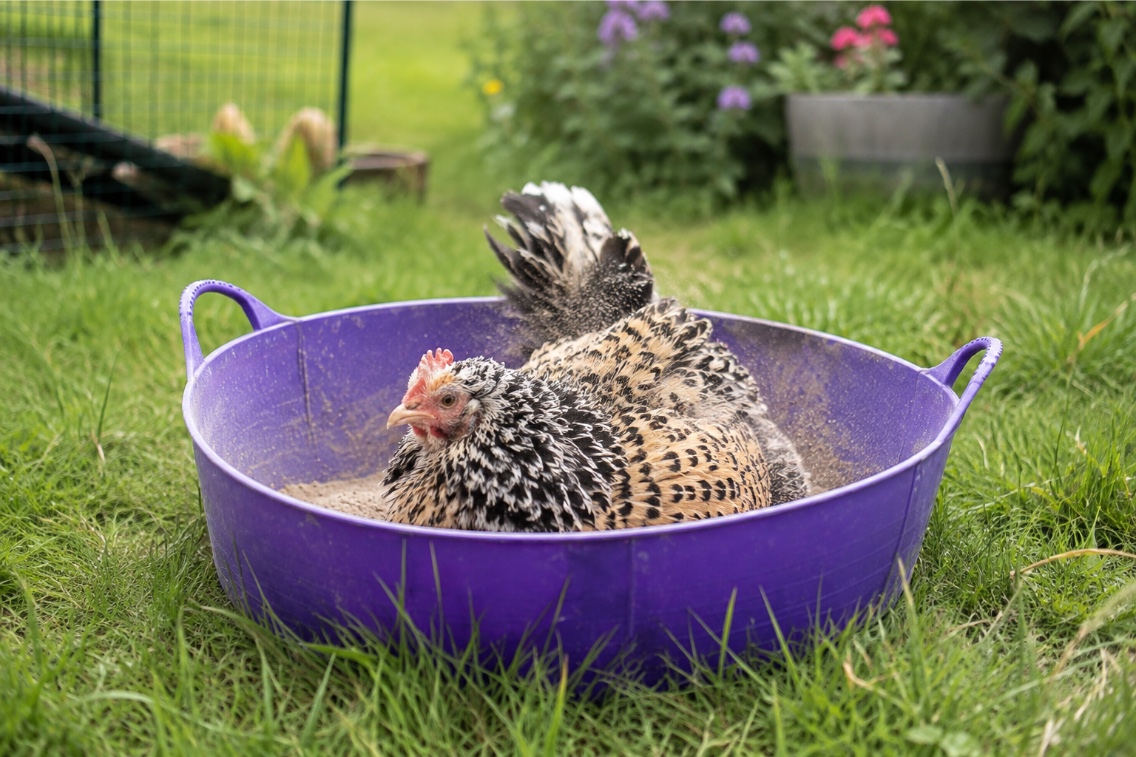
If you have ever watched a chicken wriggle, roll and flap around in a patch of dry soil, you may have wondered what on earth she is doing. It can look slightly dramatic, especially when she kicks dust over her back and lies completely still for a moment.
This is a dust bath, and it is a completely natural and important part of chicken behaviour.
Chickens use dust baths to help keep their feathers clean, reduce excess oil and discourage parasites such as mites and lice. They also seem to thoroughly enjoy them. A good dust bath gives your hens somewhere safe and comfortable to carry out this natural behaviour, particularly when the ground is wet, frozen or covered with grass.
The good news is that making a dust bath for chickens is very simple. You do not need expensive equipment or a complicated mix of ingredients. You just need a dry area, a suitable container and a loose material that your chickens can easily scratch and roll in.
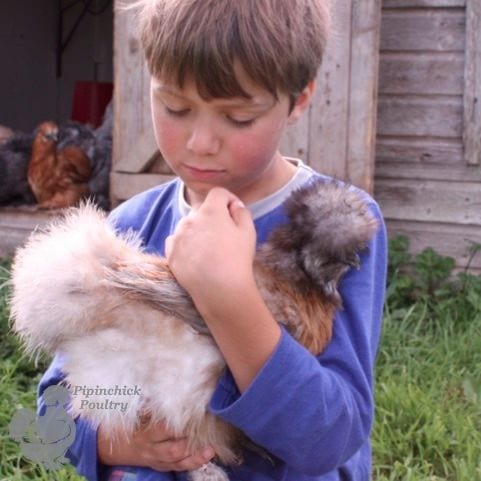
Why Do Chickens Need a Dust Bath?
Chickens do not wash with water in the same way that people or many other animals do. Instead, they work dry soil or dust through their feathers.
As a chicken rolls around, the fine particles move between the feathers and reach the skin. This helps absorb excess oils and loosen dirt. The chicken will then stand up, shake herself and preen her feathers back into place.
Dust bathing may also help make the feathers and skin less welcoming to external parasites. However, a dust bath should not be seen as a treatment for an existing mite or lice problem. If you notice signs of parasites, the birds and their housing may need to be treated properly.
Dust bathing is also a useful form of enrichment. It keeps hens occupied and allows them to express natural behaviour, which is particularly important for chickens living in covered runs or smaller garden spaces.
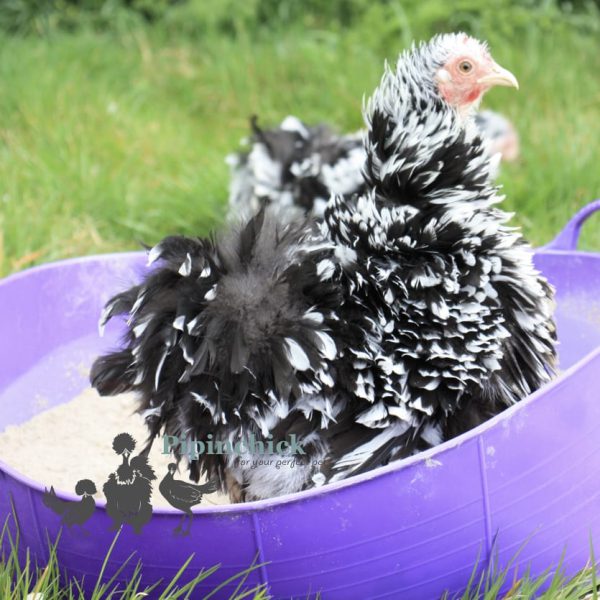
Where Should You Put a Chicken Dust Bath?
The most important thing is to keep the dust bath dry.
If the contents become wet, they will turn into mud and your chickens will probably stop using it. A covered chicken run is often the best place. You could also place it under a raised chicken house, beneath a shelter or in another area protected from rain.
Choose somewhere that your chickens can reach easily and where the dust bath will not obstruct doors, feeders or drinkers.
You may find that hens naturally choose their own dust bathing area. This is often a dry patch under a hedge, tree or chicken house. If the area is safe and stays dry, you can simply loosen the soil and allow them to continue using it.
However, a container is usually more practical because it helps keep the dust bath mixture in one place.
What Can You Use as a Chicken Dust Bath Container?
A chicken dust bath container needs to be low enough for the birds to step into, but deep and wide enough for them to roll around comfortably.
Suitable options include:
- A large shallow plastic storage box
- An old cat litter tray
- A strong garden tub
- A wooden box with low sides
- A child’s sandpit
- A large under-bed storage container
- An old tyre placed flat on the ground
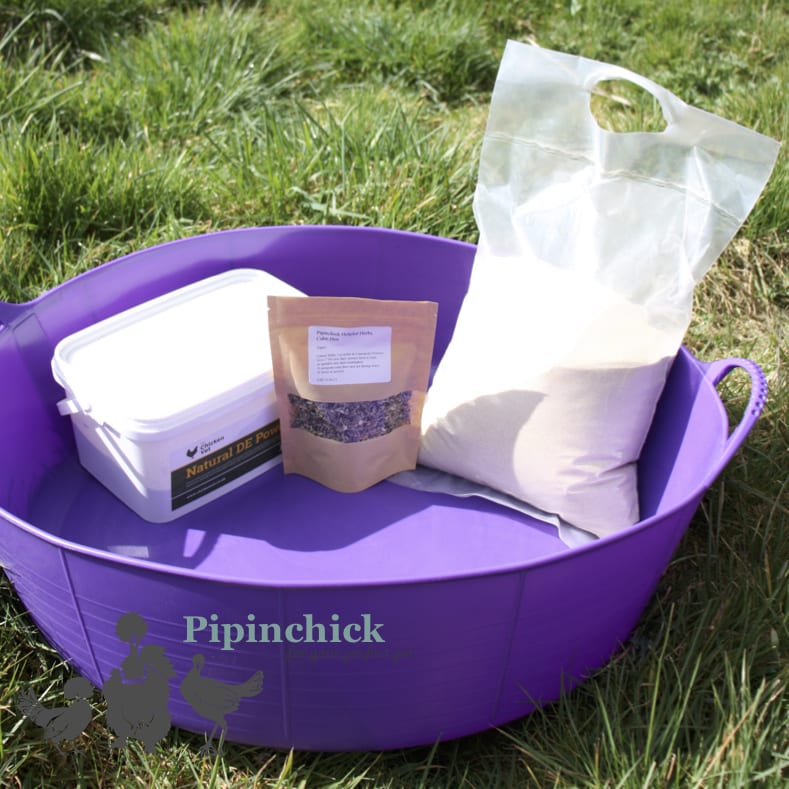
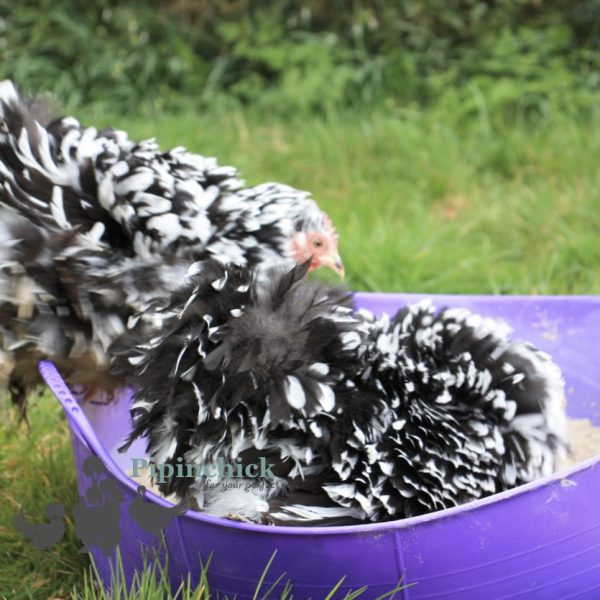
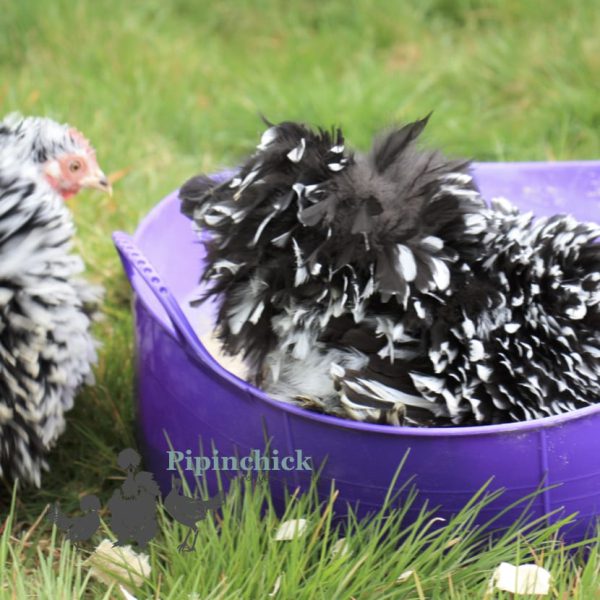
- Pipinchick’s Shallow Tubtrug Portable Dust Bath
The container should ideally be at least 15 to 20 centimetres deep. It should also be wide enough for a fully grown chicken to lie on her side and stretch her wings.
If you have several hens, choose a larger container or provide more than one dust bath. Chickens often decide they all want to use it at the same time, even when there is plenty of other space available.
Avoid containers with sharp edges, exposed screws or splintered wood. Check plastic containers regularly for cracks, particularly during cold weather.
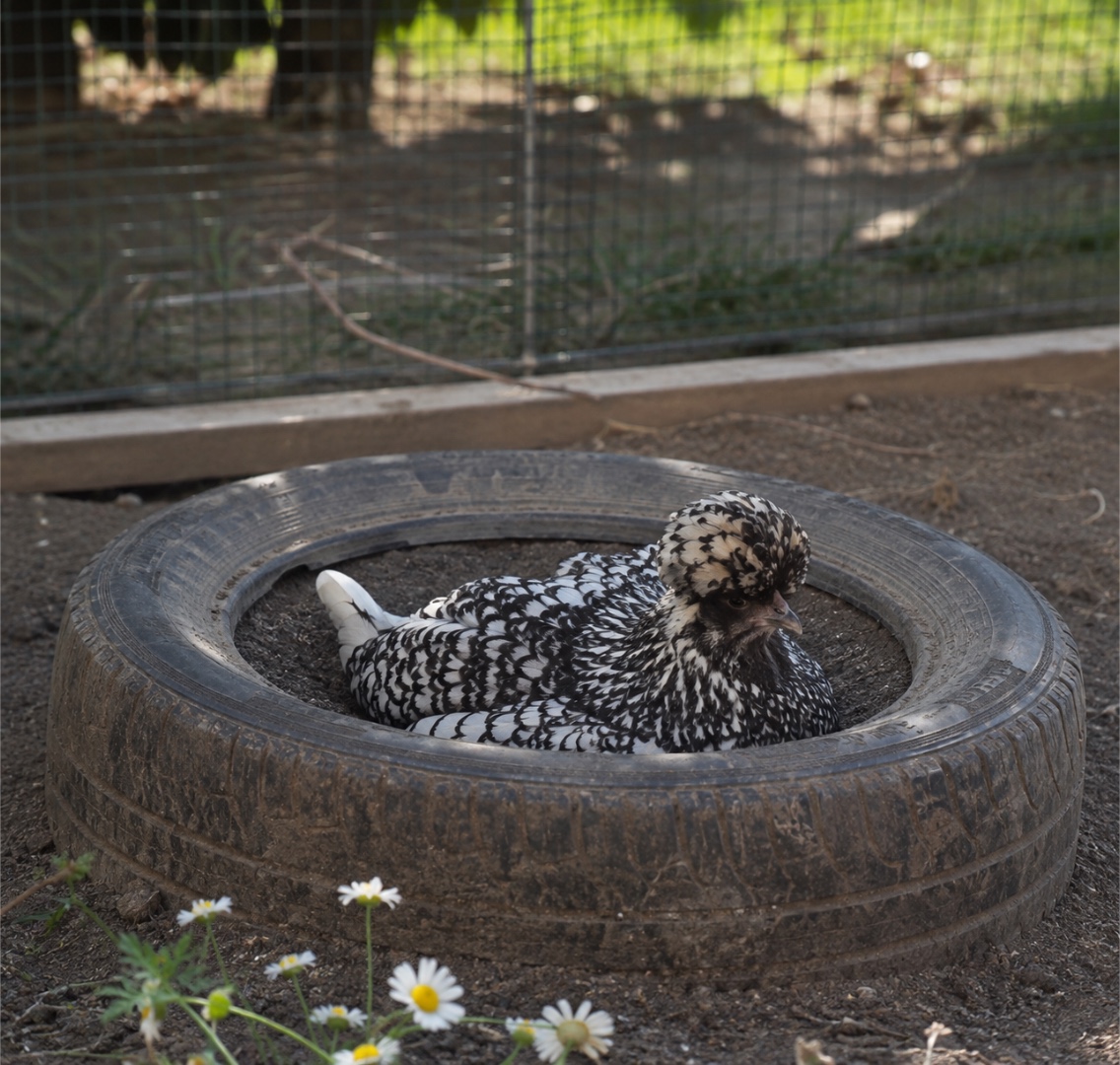
What Should You Put in a Chicken Dust Bath?
The best chicken dust bath mix is usually very simple.
Dry garden soil is one of the most natural options. Chickens happily dust bathe in ordinary loose earth, providing it is dry and has not been treated with pesticides, weedkillers or other chemicals.
You can use a mixture of:
- Dry soil
- Fine play sand
- Dry peat-free compost
- A small amount of clean wood ash
You do not need to use all of these ingredients. A mixture of dry soil and fine sand will work perfectly well for most chickens, or take a look at our Scented Sands Complete Poultry Dust Bath Kit.
The texture should be loose and fine enough for the birds to scratch and work through their feathers. Avoid anything wet, sticky, very coarse or full of large stones.
Can You Use Sand in a Chicken Dust Bath?
Yes, sand can be included in a dust bath for chickens, but it is usually best mixed with soil rather than used alone.
Fine play sand is a good choice because it is generally clean and easy for chickens to move around in. Builders’ sand may contain larger particles or unwanted debris, so it is not always suitable unless you know exactly what is in it.
Avoid very dusty silica-based products and anything labelled as industrial sand.
Sand also helps improve drainage and stops the dust bath mixture from becoming too compacted. However, if you use only sand, some chickens may not find it as appealing as a more natural soil-based mix.
A useful starting mixture is approximately half dry soil and half play sand. There is no need to measure chicken dust bath sand precisely.
Can You Add Wood Ash?
Some chicken keepers add wood ash to dust baths. Fine ash can help create the loose texture chickens enjoy and may help absorb oils.
However, only use a small amount of clean, fully cooled ash from untreated wood.
Do not use ash from:
- Painted or treated timber
- Coal
- Barbecues containing charcoal briquettes
- Burned rubbish
- Wood containing glue, varnish or chemicals
Wood ash can be very fine and dusty, so it should not make up the majority of the mixture. Too much may irritate the chickens’ eyes or respiratory systems.
If you are unsure where the ash came from, leave it out. Soil and sand are perfectly adequate on their own.
Should You Add Diatomaceous Earth?
Diatomaceous earth is sometimes recommended for chicken dust baths, but it needs to be handled carefully.
The powder is extremely fine and can become airborne when chickens flap and roll. Breathing in dust may irritate both human and chicken respiratory systems.
For this reason, many chicken keepers choose not to add it to a general dust bath. If you decide to use any powdered product around your chickens, always follow the manufacturer’s instructions and avoid creating clouds of dust.
A well-maintained dust bath made from ordinary dry soil and sand is usually all your hens need for normal bathing behaviour.
How to Make a Dust Bath for Chickens
Making the dust bath itself should only take a few minutes.
Choose a sheltered, dry location.
Place your container somewhere stable and level.
Fill it with approximately 10 to 15 centimetres of dry soil, sand or a mixture of both.
Break up any hard clumps and remove stones, sharp objects or rubbish.
Leave enough space at the top of the container to reduce the amount of mixture kicked out.
Your chickens may investigate it immediately, or they may ignore it for a few days. You can encourage them by sprinkling a little loose soil around the edge or placing the container near an area where they already like to dust bathe.
Once one hen starts using it, the others will usually follow.
How Do You Keep a Chicken Dust Bath Clean?
A chicken dust bath does not need intensive cleaning, but it should be checked regularly.
Remove droppings, wet bedding, feathers and any food that has been scratched into it. Break up compacted areas and top up the soil or sand when the level drops.
If the mixture becomes wet, spread it out somewhere dry before returning it, or replace it with fresh material.
The full contents should be replaced if the dust bath becomes dirty, develops an unpleasant smell or is contaminated by rodents or wild animal droppings.
It is also worth checking underneath the container for signs of dampness, slugs or rodents.
What If My Chickens Will Not Use Their Dust Bath?
Some chickens are very particular about where they dust bathe.
If they are not using the container, check that it is:
- Large enough
- Easy to step into
- In a quiet location
- Protected from rain
- Filled with a fine, loose mixture
- Away from busy feeders and drinkers
Your hens may simply prefer a natural patch of dry earth. You can try moving the dust bath to the area they have chosen or placing some of their preferred soil inside the container.
Do not worry if they only use it occasionally. Chickens often dust bathe more frequently during warm, dry weather.
Can Chicks Have a Dust Bath?
Young chicks may begin attempting to dust bathe from a surprisingly early age.
You can provide a very shallow tray of clean, dry soil or fine sand once they are old enough to move around confidently. The tray should be stable and easy to step in and out of.
Avoid deep containers and very dusty materials. Always make sure the chicks cannot become trapped, chilled or covered in wet material.
A Simple Way to Keep Your Chickens Happy
A dust bath is one of the easiest and least expensive forms of chicken enrichment you can provide.
It gives your hens somewhere to keep their feathers in good condition, helps them carry out natural behaviour and can keep them entertained for a considerable amount of time.
There is no need to make the mixture complicated. A large container filled with dry soil and fine sand, placed somewhere sheltered, is often the perfect chicken dust bath.
You may still find your hens digging a new hole elsewhere five minutes later, but that is all part of the fun of keeping chickens.
Find Everything You Need for Happy, Healthy Chickens
At Pipinchick, we understand that the little details make a big difference to your chickens’ health and happiness. From choosing the right hens for your garden to creating a comfortable, enriching space for them to explore, we are here to help.
Take a look at our chickens for sale and chicken-keeping supplies, or get in touch with the Pipinchick team if you need friendly advice about caring for your flock.